· Actualizado · Por Equipo Pindoor
Urban Cueca in Valparaíso: Brava, Chora and What to Wear
A Guide to Urban Cueca, the genre of Chilean folklore that originated in cities and ports. Explore its main styles: the cueca chilenera (a tradition of slaughterhouses and markets), the cueca brava (attitude, swagger, and youth), the cueca chora (created by Roberto Parra with a touch of jazz and bohemian flair), and the cueca porteña of Valparaíso. Discover its characteristics: a lively rhythm, urban lyrics, singing in a circle, and city attire. A guide to understanding the history, the figures, and the places where this vibrant expression of the national dance is brought to life.
To talk about the urban cueca is to delve into the most Chilean, urban, and passionate aspect of national folklore. Although popular tradition tends to associate the cueca solely with the countryside, blankets, and spurs, in the big cities—and especially in the ports, bohemian districts, and working-class neighborhoods of Valparaíso and Santiago—the national dance took root in the concrete, transforming into a living expression of street culture.
This guide to the urban cueca explores its origins, the different styles that fall under this category (such as the chilenera, the brava, and the chora), and its importance to the identity of the port cities.
What Is Urban Cueca?
Urban cueca is the overarching category that encompasses all forms of cueca that emerged in the context of cities, urban centers, port areas, and working-class or bohemian neighborhoods beginning in the 19th and 20th centuries.
Unlike the rural or huasa cueca (which has a slower rhythm and rural themes), the urban cueca is characterized by:
- A livelier rhythm and pronounced syncopation: A danceable, festive, and fast-paced beat.
- Circular singing and an “afatada” voice: A powerful, raw vocal technique projected upward, ideal for being heard amid the hubbub of a fonda, a chicherío, or a picantería.
- Urban themes: Its lyrics celebrate nightlife, tragic love, hard labor, prison, port-side characters, soccer, bohemian life, and popular mischief.
The Urban Cueca Family: Styles and Nuances
Under the broad umbrella of urban cueca, subgenres and names coexist that reflect historical, geographical, and attitudinal nuances:
1. Cueca Chilenera (The Traditional Root)
This is the cradle of urban cueca. Developed in neighborhoods such as Barrio Matadero, La Vega, and Estación Central in Santiago, it has a rigorous meter and structure. Its greatest historical exponent is the group Los Chileneros (featuring legendary figures such as Hernán “Nano” Núñez Oyarce), who laid the foundations for “canto por mano” and the traditional three-part harmony.
2. Cueca Brava (Attitude and Swagger)
Popularized extensively in the 1990s and 2000s by groups such as Los Tres (with their 2000 album *La Yein Fome*) and 3x7 21, the cueca brava is an expression of urban swagger. It retains the chilenera structure but adds a more rebellious, direct, and streetwise attitude, reviving the value of public space and bohemianism.
3. Cueca Chora (Porteño Flavor and Jazz)
Deeply rooted in the port of Valparaíso, the cueca chora is inextricably linked to the figure of Roberto Parra Sandoval (creator of Jazz Guachaca and the Cuecas Choras). It is a carefree, mischievous variant, steeped in the culture of the underworld, the port bars, prostitution, and the seedy underbelly of society, where the piano, jazz guitar, and double bass take center stage.
4. Cueca Porteña
This variant originated in the hills, vacation homes, and bars of the Barrio Puerto and Clave Street in Valparaíso. With its own distinctive rhythm marked by the ebb and flow of the sea and the presence of accordions, bar pianos, and tambourines, it is the musical pulse of the city’s traditional bohemian scene.
Difference between cueca brava and cueca chora
Both are urban cuecas: they are sung in a circle, with a strong voice, and follow the structure of the cueca chilenera. What differs is the origin of the name and the tone.
- Cueca brava: This is the name given to the resurgence of urban cueca in Santiago since the late 1990s, with young groups like 3x7 21 returning to the chilenera tradition. It emphasizes strength: powerful singing, an energetic rhythm, and a dance full of swagger.
- Cueca chora: This style is associated with Roberto Parra Sandoval and cuecas featuring mischievous, streetwise lyrics that tell stories of bars, ports, and the underworld. It emphasizes humor and mischief.
In practice, many musicians use the two names almost interchangeably, and within the same dance circle, one can transition from a “cueca brava” to a “cueca chora” without stopping the dance.
Attire for urban cueca: brava, chora, and porteña
Urban cueca has no official costume. Neither the brava, nor the chora, nor the porteña has dress regulations like those of the cueca huasa championships. What you see in the dance circles is city attire inspired by the bohemian spirit of the mid-20th century: the kind worn at markets, bars, and country estates where people used to sing.
What’s common to all styles
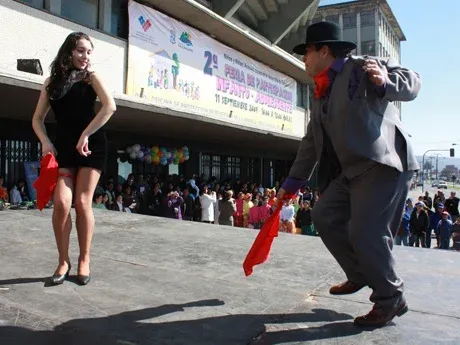
- Scarf: this is the only essential item. Made of lightweight fabric, white or colored.
- Leather shoes with firm soles: the footwork has to make a sound, and the dance is often performed on concrete or cobblestones.
- Clothing that allows you to move your arms and spin.
Cueca Brava Attire
This is the style with the most recognizable look. Men wear dress pants, a plain shirt (often white), a vest or jacket, and a short-brimmed cloth hat. Women wear a dress or skirt with a flared hem at knee length—floral, polka-dot, or solid—with a vest or shawl and low- or medium-heeled shoes. The idea is to be dressed up for going out, not in costume.
Cueca Chora Attire
Partly the same as everyday city wear, but looser, as if for a night out at a bar: a jacket without a tie, an unbuttoned shirt, a hat, and simple party dresses. Here, a playful attitude matters more than the outfit itself.
Attire for the cueca porteña
In Valparaíso, the basics are the same, with adjustments for the port: a warm coat, because at night the wind and humidity are noticeable even if it’s sunny during the day, and shoes that can handle stairs and cobblestones. At dance gatherings in bars and plazas, many people dance in the clothes they arrived in and just pull out a handkerchief; at the Fiestas Patrias festivals, you’ll see more floral dresses and suits with hats.
What to Wear If You’re a Visitor at a Dance
There’s no need to dress up. With comfortable clothes, sturdy shoes, and a handkerchief, you’re ready to join the dance circle. What matters most on the dance floor isn’t the outfit, but the flirtation, the playfulness, the elegance of the footwork, and the chemistry between the partners.
Where to Experience Urban Cueca in Valparaíso
The port is one of the most important living bastions of this tradition throughout the year:
- Rincón de las Guitarras: The epicenter of bohemian life and traditional singing in the city center.
- La Isla de la Fantasía: A historic venue for Valparaíso’s musical tradition on Cerro San Juan de Dios.
- Puerto Market and Squares: Public spaces where “cueca circles” and open community workshops are constantly organized.
Tips for Enjoying a Cueca Circle
- Learn to clap along: The audience isn’t just a spectator; rhythmic clapping (palmeo) supports the singers’ energy throughout the entire piece.
- Join the circle without fear: Urban cueca is inclusive and community-oriented. It’s not about championship-level technique, but rather the enthusiasm and intention behind the dance.
- Listen to the lyrics: Pay attention to the folk poetry; the cuartetas and seguidillas are true urban chronicles of Chile’s history.
Frequently asked questions
Do you have to wear traditional folk dance attire to dance in a circle?
No. All you need is comfortable clothing, sturdy shoes, and a scarf; at the dance gatherings in Valparaíso, many people dance in their everyday clothes.
What color is the scarf in the urban cueca?
There's no rule: white is the most common, but colored handkerchiefs are also used. The important thing is that it be made of lightweight fabric so it flutters when you wave it.
Where can I go dancing to cueca in Valparaíso this week?
The ruedas, tocatas, and fondas featuring cueca are posted on Panoramas de Pindoor, under the Dance and Music categories.
When is there the most cueca in Valparaíso?
In September, during the Fiestas Patrias celebrations, with food stalls and festival tents throughout the city. The rest of the year, there are gatherings at bars and cultural venues in the Plan and Barrio Puerto neighborhoods.